lee@chnzbtech.com +86-13991875422 +86(0)2988087080
- All
- Product Name
- Product Keyword
- Product Model
- Product Summary
- Product Description
- Multi Field Search
 English


 |




Copper Busbar System
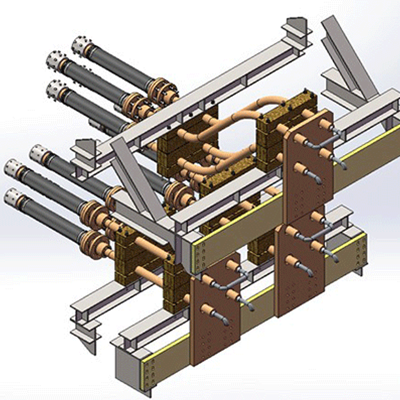
The Copper Busbar System, also known as the High Current System, is the secondary-side power transmission system connecting the furnace transformer to the electrodes in EAF, LF, SAF, and other metallurgical furnaces.
The system mainly consists of:
•Copper busbars
•Flexible copper shunts
•Compensators
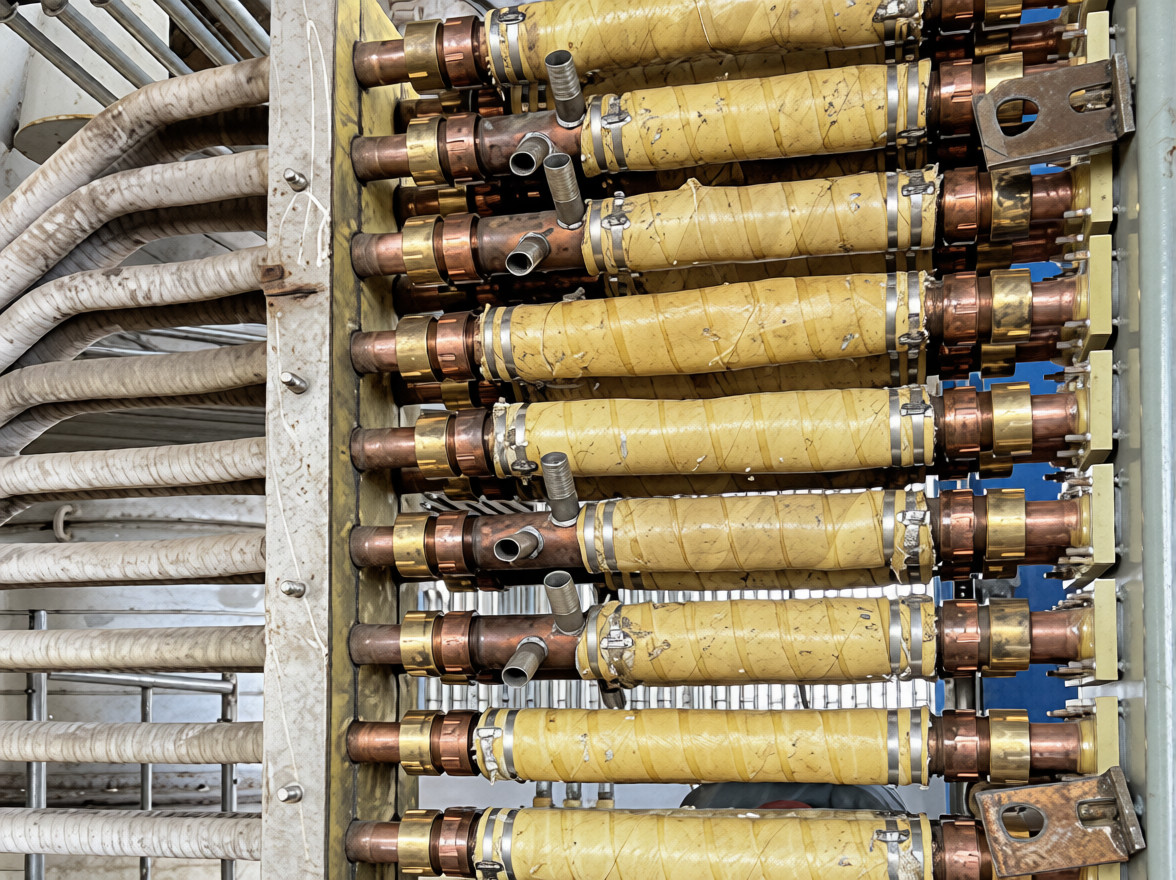
•Water-cooled copper bus tubes
•Through-wall copper pipe assemblies
•Water-cooled cables
•Conductive electrode arms
•Electrode holders and contact pads
•Graphite electrodes
The system is designed to safely transmit extremely high currents while minimizing power loss, voltage fluctuation, and thermal deformation.
System Features
Efficient Current Transmission
High-conductivity copper components ensure stable power delivery with low electrical resistance and reduced energy loss.
Water-Cooled Structure
Critical components such as bus tubes and cables adopt water-cooled designs to improve operational stability and extend service life under high-temperature conditions.
Flexible Compensation Design
Flexible copper shunts and compensators absorb thermal expansion and mechanical movement, reducing stress on fixed connections and improving system reliability.
Safe and Reliable Support Structure
Non-magnetic stainless steel brackets and high-grade insulation materials are used to prevent electrical arcing and ensure safe operation.

Copper Busbar Design
Different busbar configurations are available depending on furnace type and operating conditions.
Traditional furnace designs use insulated copper bus tubes mounted on support arms, while modern furnaces increasingly adopt conductive electrode arms made of copper-clad steel or aluminum alloy structures.
The copper busbar is typically connected to the water-cooled cables through cast copper terminals or fabricated copper contact plates.
Several termination structures are available for the electrode connection, including:
•Flanged contact connections
•Flat blade connections
•Round tube contact connections
These configurations ensure reliable current transfer and convenient maintenance.

Aluminum Busbar vs Copper Busbar
Copper Busbar
•Excellent conductivity
•Lower electrical loss
•Strong mechanical performance
•Long service life
•Better resistance to temperature fluctuation
•Higher reliability under heavy-current operation
Aluminum Busbar
•Lower material cost
•Lighter weight
•Lower conductivity
•Larger cross-sectional requirement
•Shorter service life
•More sensitive to operating environment
The selection should be based on furnace capacity, operating conditions, investment budget, and maintenance requirements.
Product Advantages
•Low electrical resistance and reduced power loss
•Stable high-current transmission
•Excellent thermal stability under heavy-duty operation
•Improved furnace efficiency and current distribution
•Long service life with reduced maintenance requirements
•Reliable operation under high-temperature furnace conditions
Manufacturing Advantages
Compared with conventional bolted connection structures, our copper busbar system adopts higher manufacturing standards to improve conductivity and operational reliability.
Key features include:
•Precision-machined contact surfaces
•Argon arc fusion welding technology
•Silver/tin anti-oxidation surface treatment
•Strict dimensional matching and assembly control
•Complete stress-relief annealing treatment
These processes effectively reduce overheating, oxidation, and contact resistance during long-term operation.


